
Designing the Zoo, Designing the Future:
Building and Piloting a Classroom-ready STEM Program
Building STEM Skills Through Meaningful Project-Based Learning
How do hands-on, project-based learning experiences impact student learning, engagement, and future-ready skills? To answer that question, 3DuxDesign partnered with educators across diverse learning environments to pilot the Design-a-Zoo Challenge, a classroom-ready STEM program that combines engineering, science, mathematics, literacy, collaboration, and creativity through an authentic design experience. The results demonstrated meaningful growth in academic understanding, STEM identity, collaboration, and student confidence.
The Study at a Glance
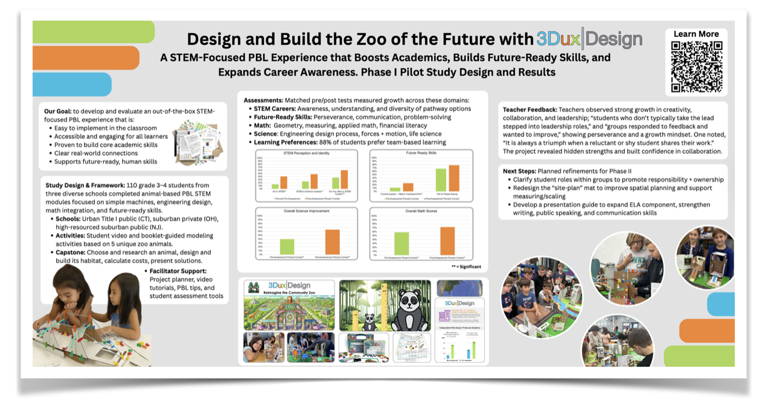
What happens when students become zoo designers, engineers, and problem-solvers? To find out, we piloted the Design-a-Zoo Challenge in three diverse elementary schools spanning urban, suburban public, and private settings. Throughout this multi-week project-based learning experience, 3rd and 4th grade students researched animals, designed interactive habitats, engineered simple machines, and collaborated to solve authentic design challenges before showcasing their work to families and their communities.
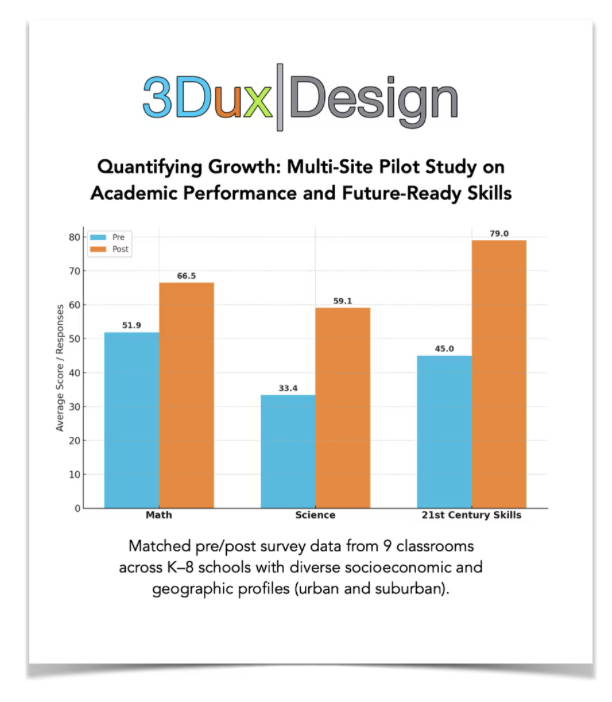
We evaluated the program using pre- and post-assessments, student surveys, facilitator observations, and performance-based tasks. The results showed meaningful growth not only in STEM learning, but also in collaboration, creativity, communication, and student confidence.
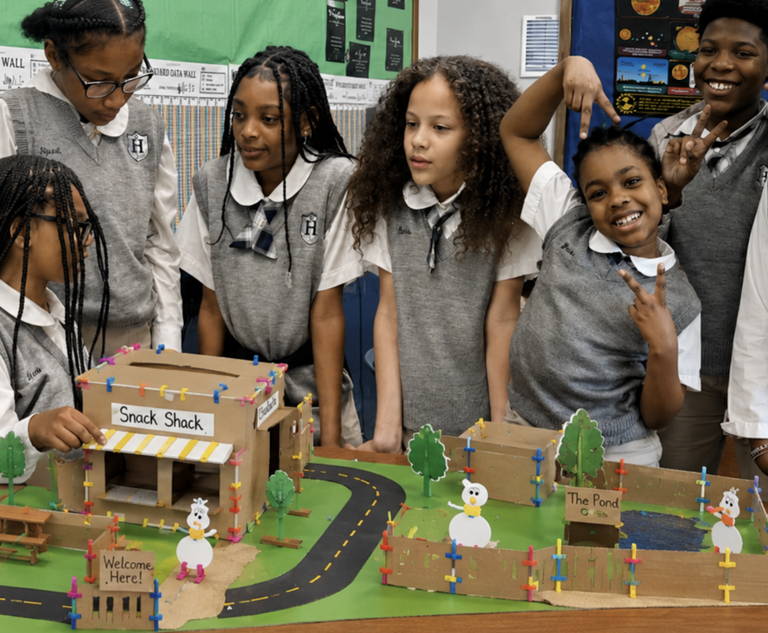
Learning in Action!
Students didn’t just complete activities — they worked through a connected design process where each step built toward a final zoo exhibit. Along the way, they:
- Researched animal habitats and adaptations
- Designed and built interactive cardboard zoo exhibits
- Applied simple machines to solve engineering challenges
- Tested, revised, and improved their prototypes
- Collaborated with teammates to solve open-ended problems
- Presented their final designs to authentic audiences
The curriculum intentionally integrates engineering, science, mathematics, literacy, communication, creativity, and collaboration into one cohesive learning experience. Student learning was measured using academic assessments, engineering performance tasks, facilitator observations, student reflections, and STEM identity surveys.
The Design-a-Zoo Challenge culminated in authentic student showcases where learners presented their work to classmates, educators, families, and community members. Students explained the engineering decisions behind their designs, demonstrated simple machines, defended design choices, and reflected on what they learned throughout the project. For many students, this was their first opportunity to present themselves as designers, engineers, and problem-solvers.
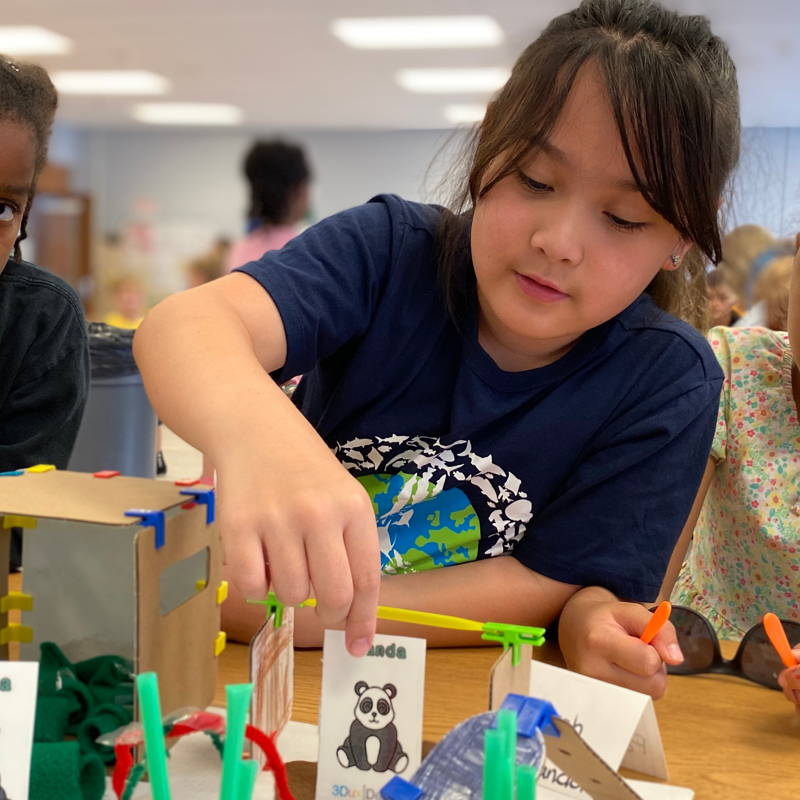
Panda Enclosure with lots of playful toys for exercise!
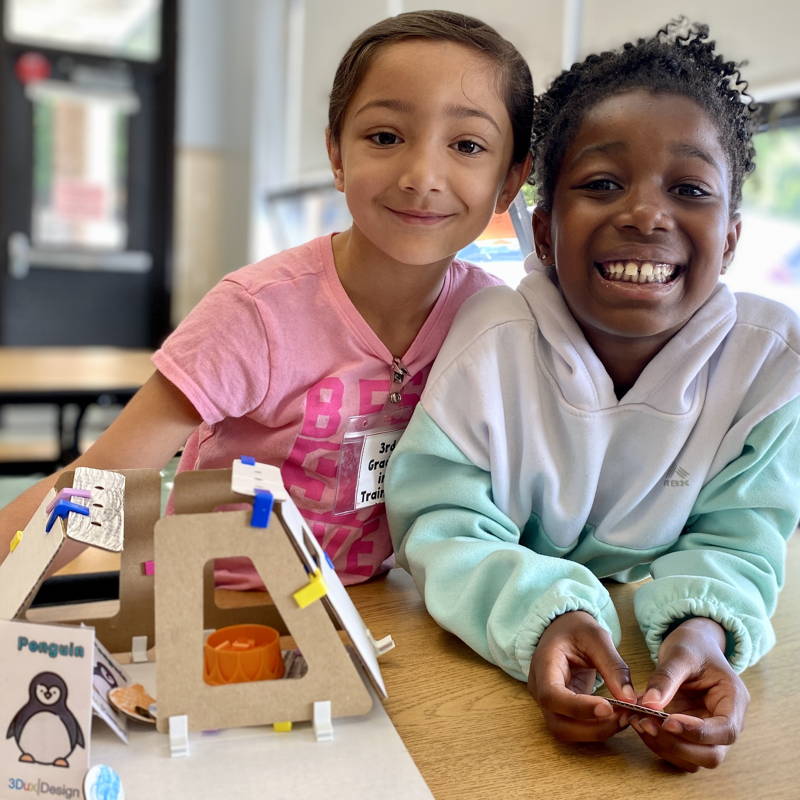
Customers interact with the animals with the "Feed the Penguin" catapult.
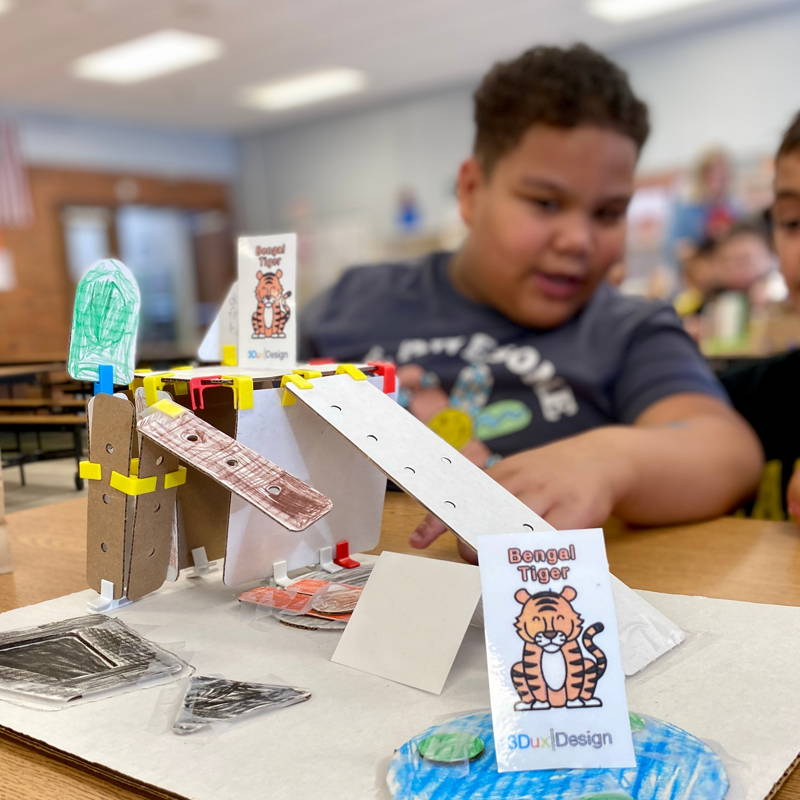
They help the tiger get up and down the tree safely with a gentile slope.

Elephants feel at "home" eating from the treetops. The pulley system helps!
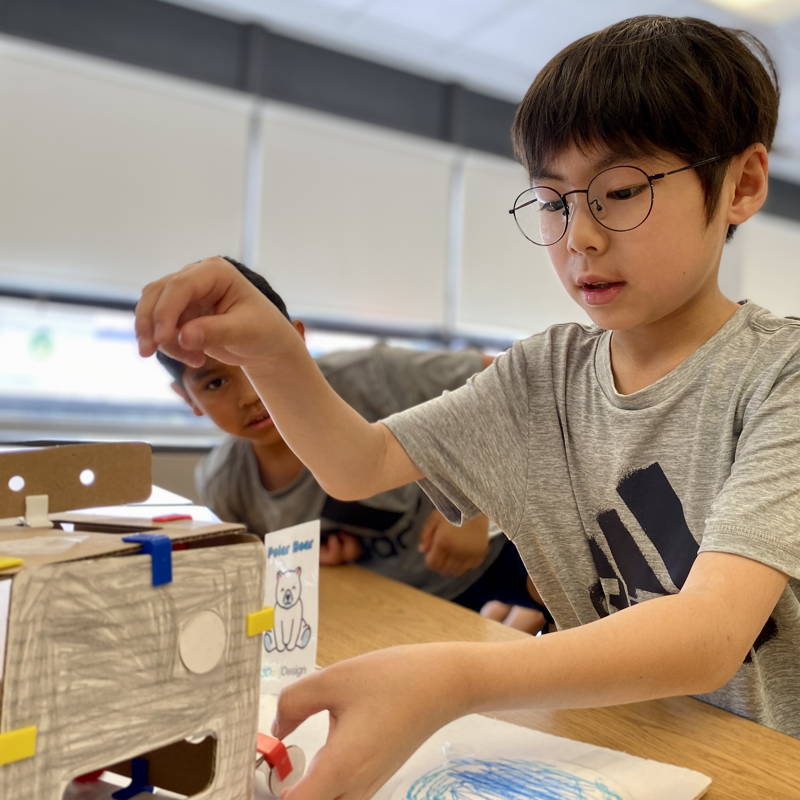
Polar bears get toys stuck under the den. A wedge will help free the toys!
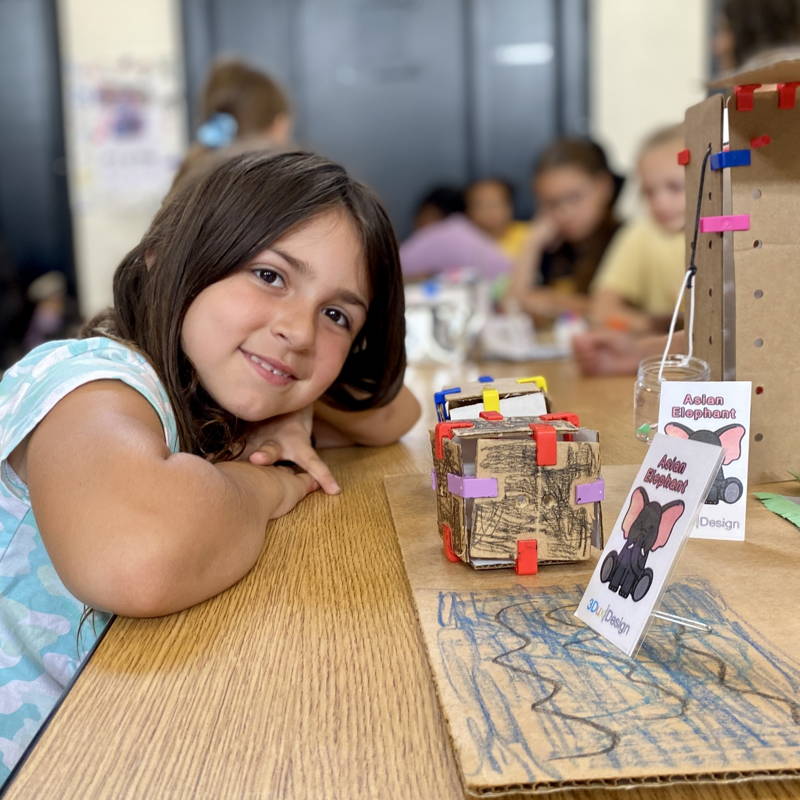
A proud and accomplished engineer- that's what its all about :)
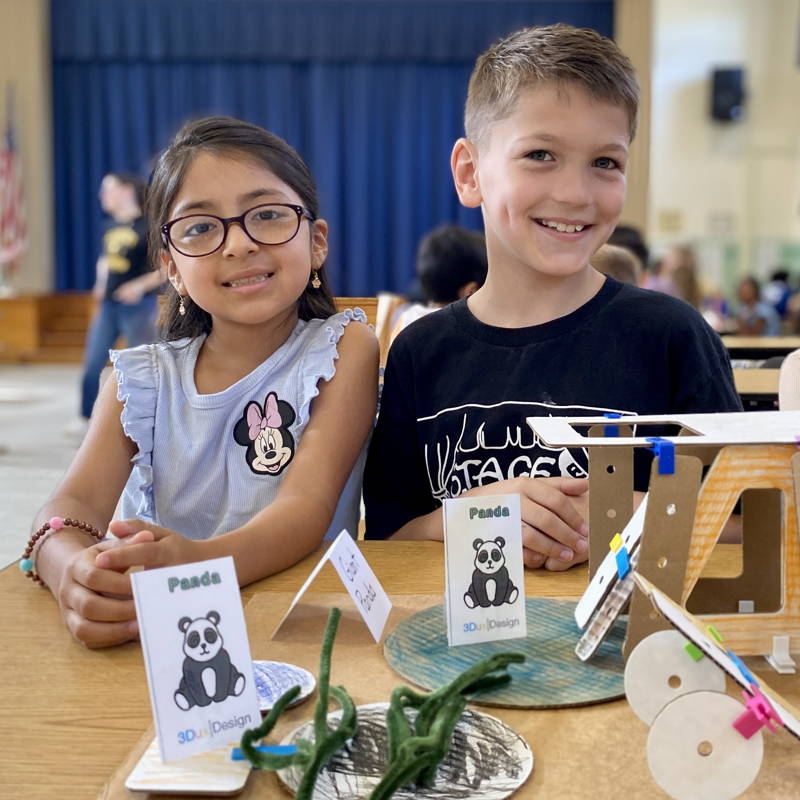
Come one. Come all. The pandas are awake and active today!
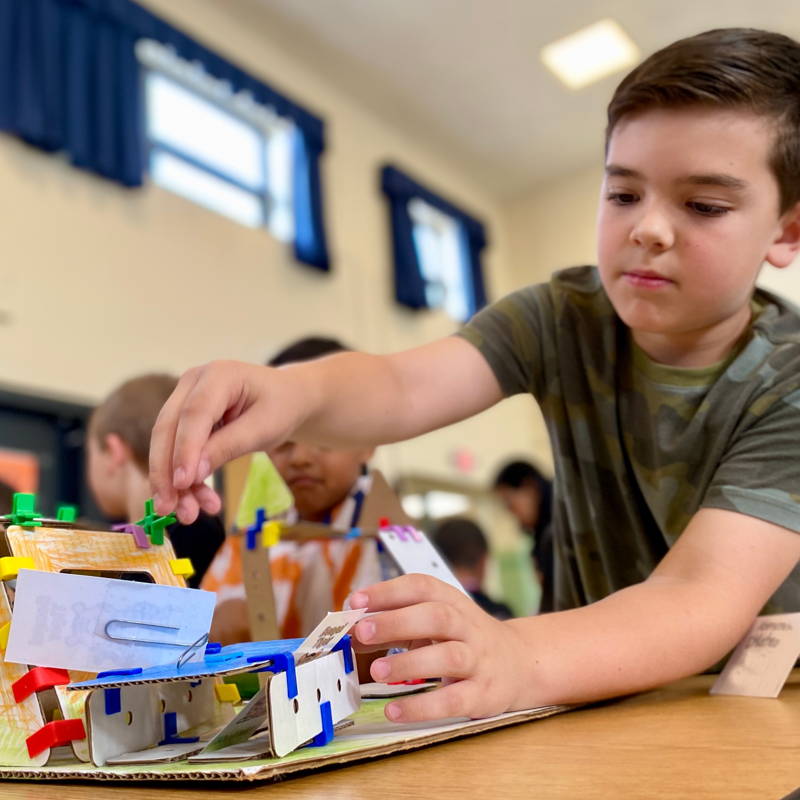
These young engineers understand how simple machines and forces work in the real world.
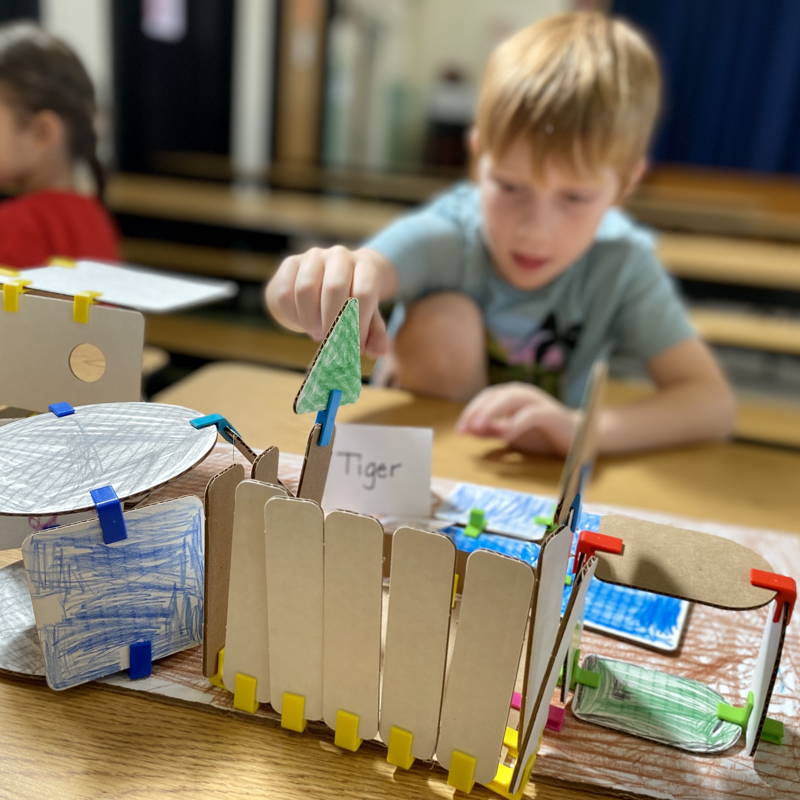
And when the engineering is done, leave some time for your young designers to visit the zoo and play!
Key Findings: See the Data
- Academic Growth: Students demonstrated meaningful gains in STEM-related content knowledge, including mathematics, science, engineering concepts, and financial literacy, while connecting classroom learning to real-world design challenges.
- STEM Identity:Interest in STEM careers increased by more than 20 percentage points, with students developing a broader understanding of what engineers, designers, and innovators do in the real world.
- Collaboration & Communication: Teachers observed stronger teamwork, communication, student ownership, and confidence as students shared ideas, problem solved, and presented their work to authentic audiences.
- Creativity & Problem Solving: Students increasingly viewed creativity, design thinking, iteration, and feedback as essential parts of engineering and STEM learning.
- Student Engagement: Across all participating schools, educators consistently reported exceptionally high engagement, enthusiasm, and persistence throughout the project.
Read the White Paper
See Highlights at a Glance
A Parallel Pilot with Unique Learners, and OT-Informed Lens... See the Data
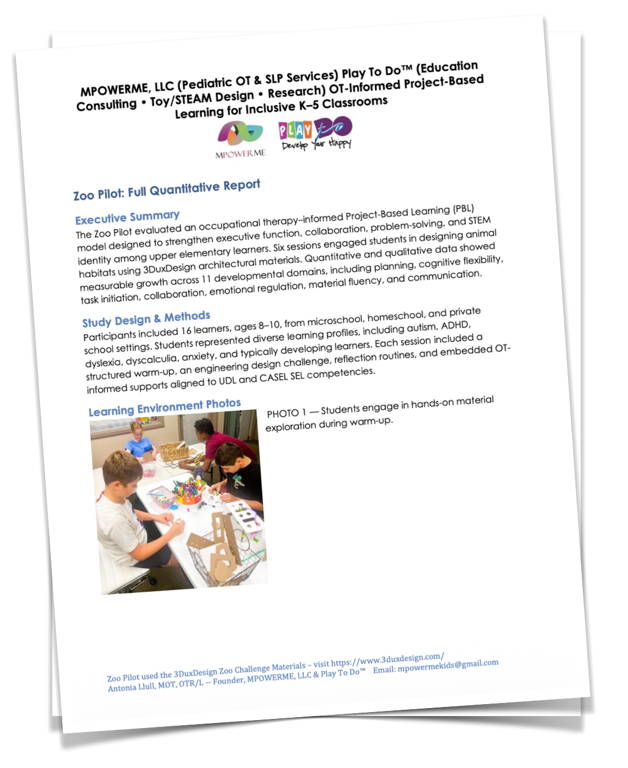
This smaller enrichment-style study looked at the Zoo Challenge through a different lens: how hands-on, OT-informed project-based learning could support skill-building for unique learners. Led by Antonia Llull, MOT, OTR/L, the pilot included 16 microschool, homeschool, and private-school students with a range of learning profiles, including neurodivergent learners.
Across six sessions, students used 3DuxDesign Zoo Challenge materials to design animal habitats, solve engineering problems, collaborate with peers, and reflect on their work. The goal was not simply to measure academic content. It was to better understand how this kind of tactile, creative, structured building experience could support executive function, collaboration, communication, emotional regulation, problem-solving, and confidence.
From an OT perspective, that matters. For many learners, especially students who thrive through movement, touch, visuals, and making, the Zoo Challenge offered an accessible way to plan, test ideas, adapt when things did not work, and show what they know in a meaningful way.
See the Study
Teacher feedback was overwhelmingly positive. Highlights include:
Final Presentations... From Classroom to Communities!
In New Jersey, the 3Dux Team joined another showcase where every team shared their zoo design. The excitement was palpable. Students weren’t just presenting to classmates - they knew their projects would be highlighted on the 3DuxDesign website. That sense of purpose gave them extra confidence and pride.
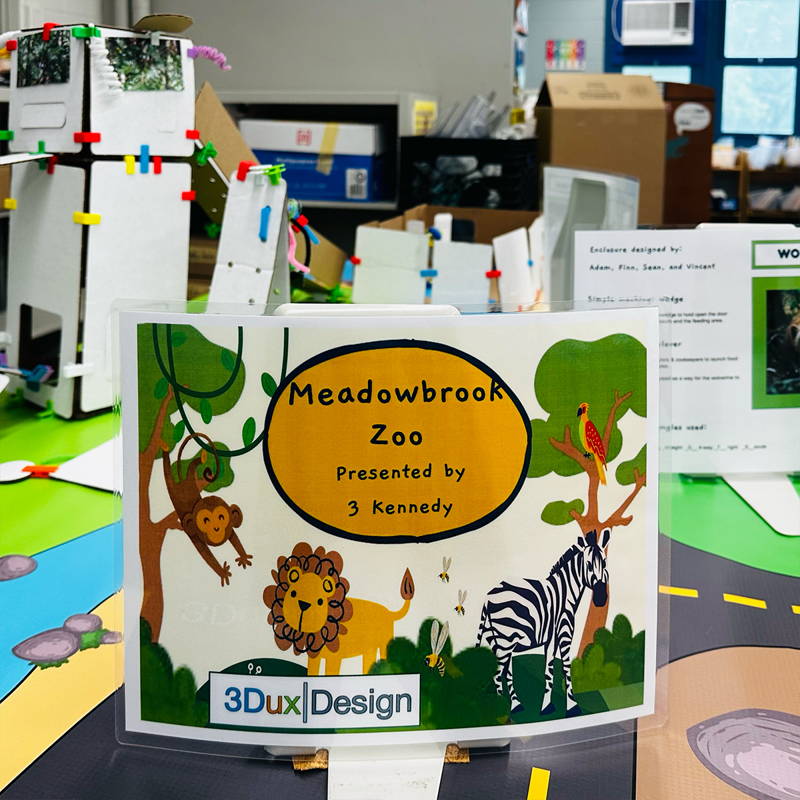
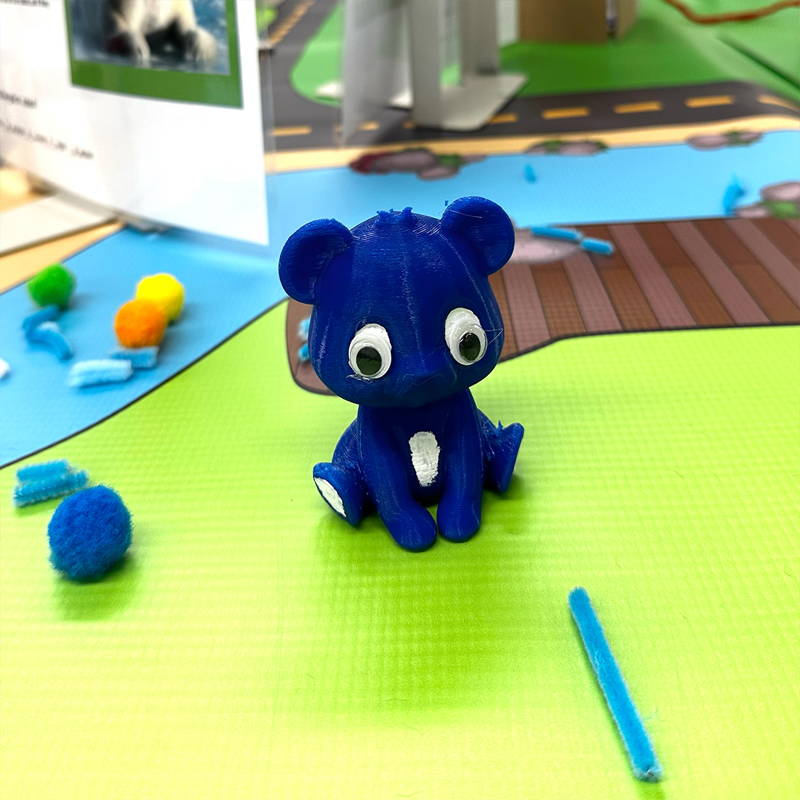
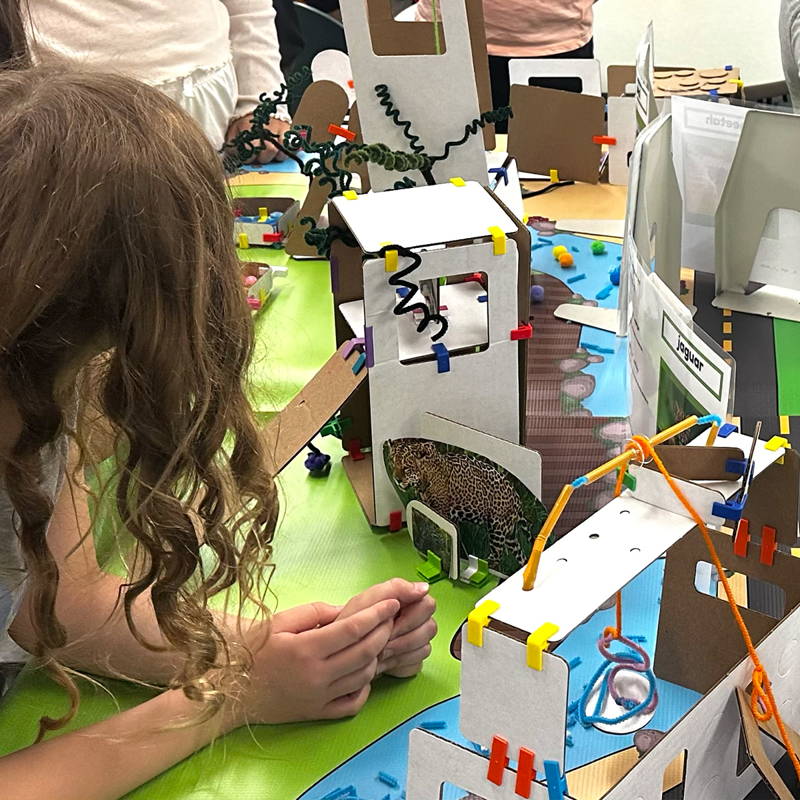
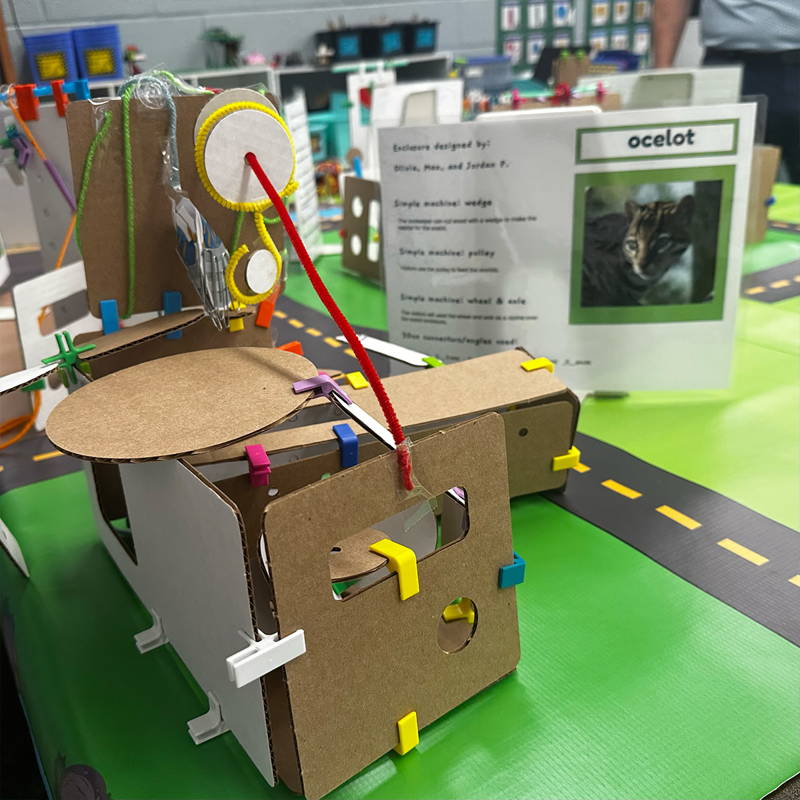
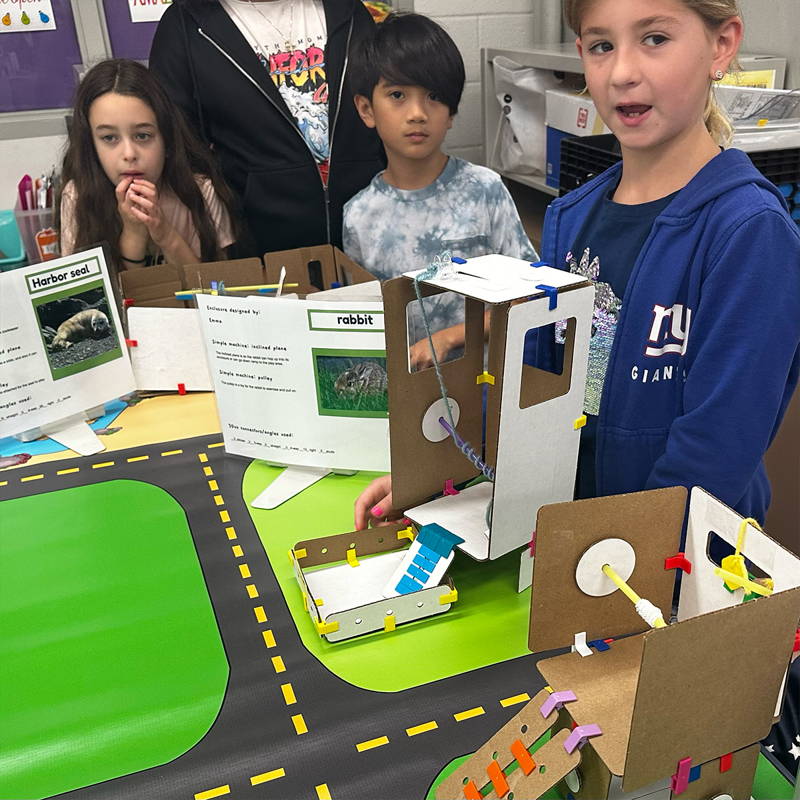
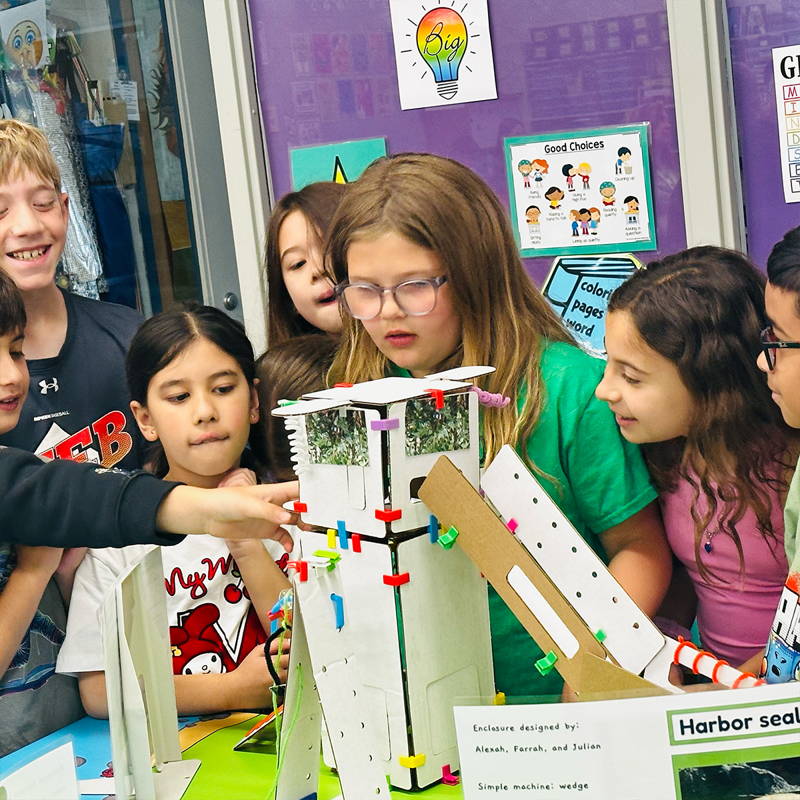
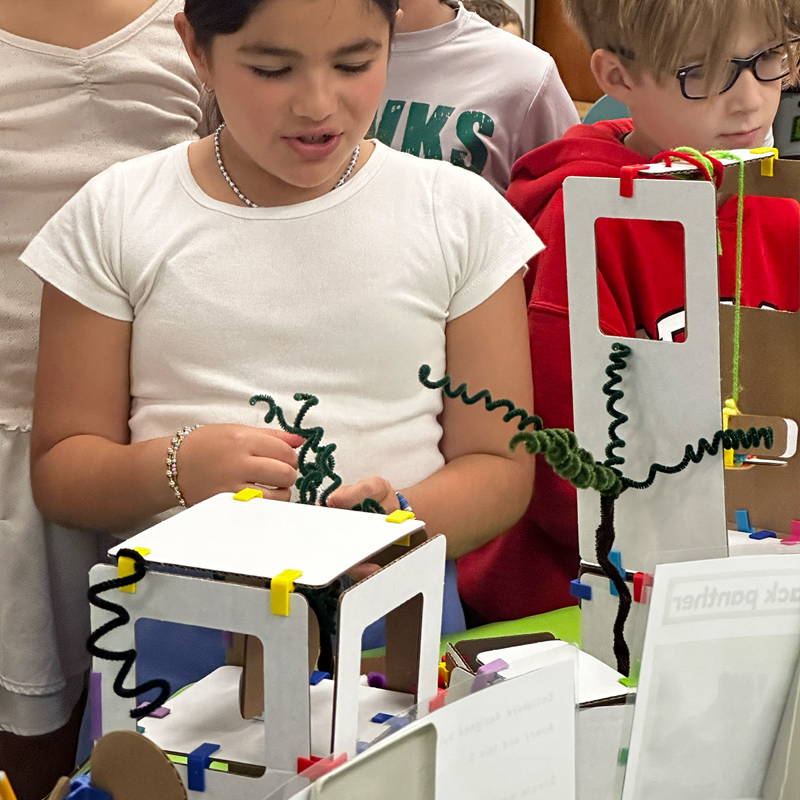
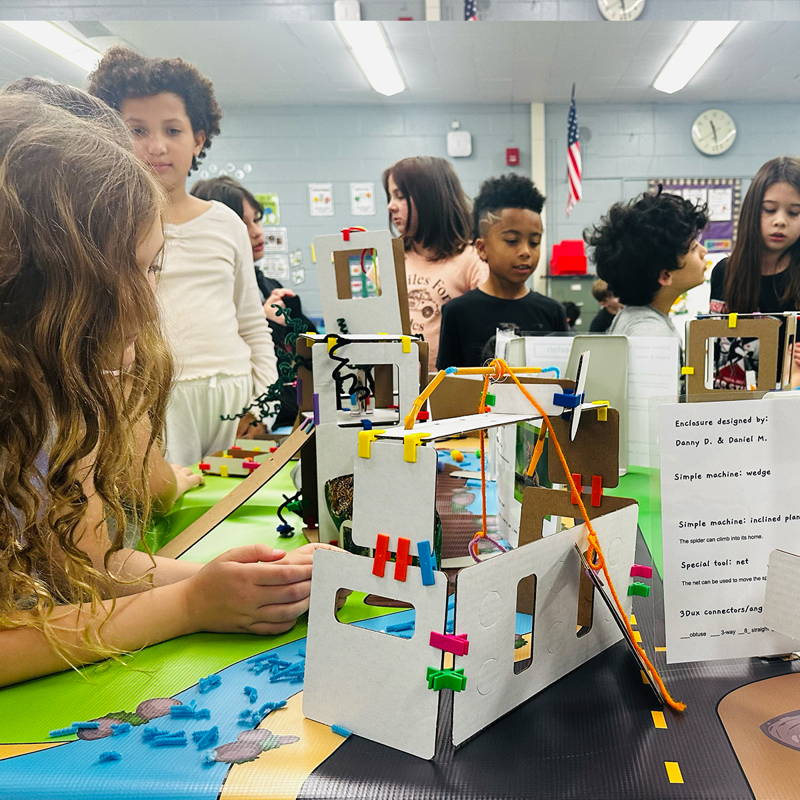
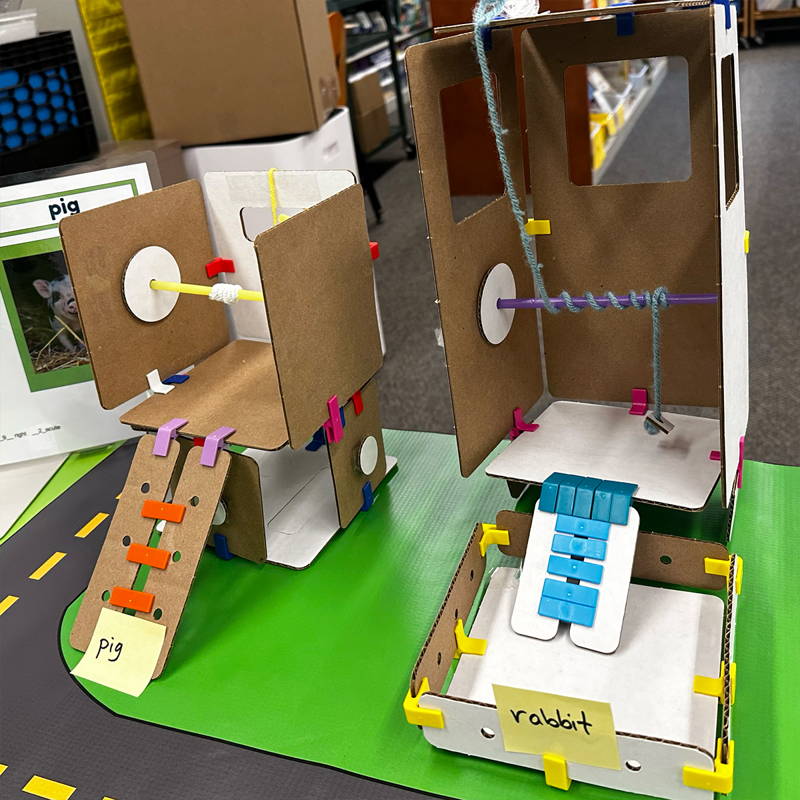
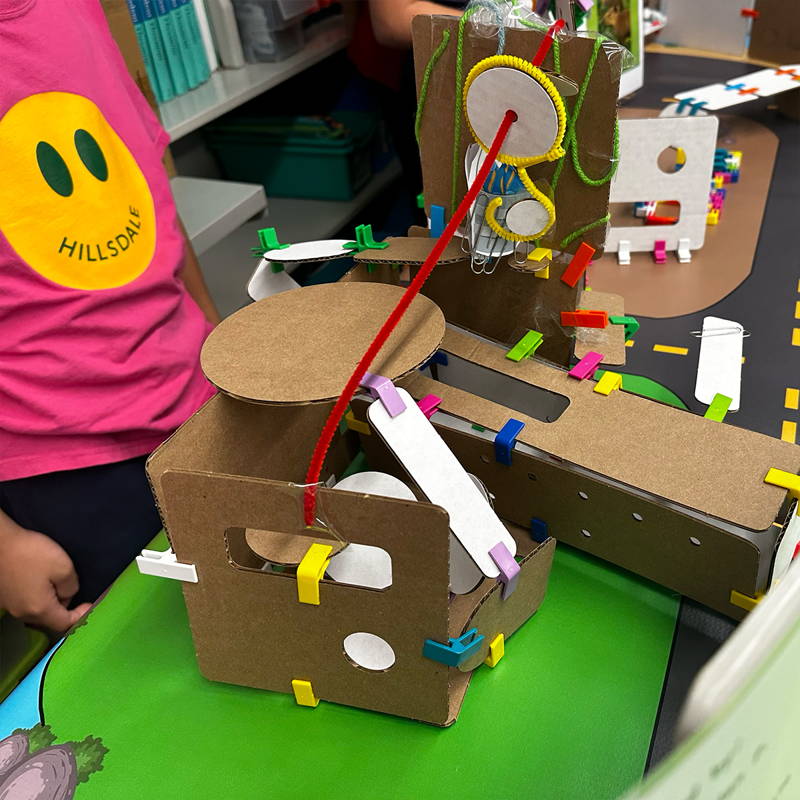
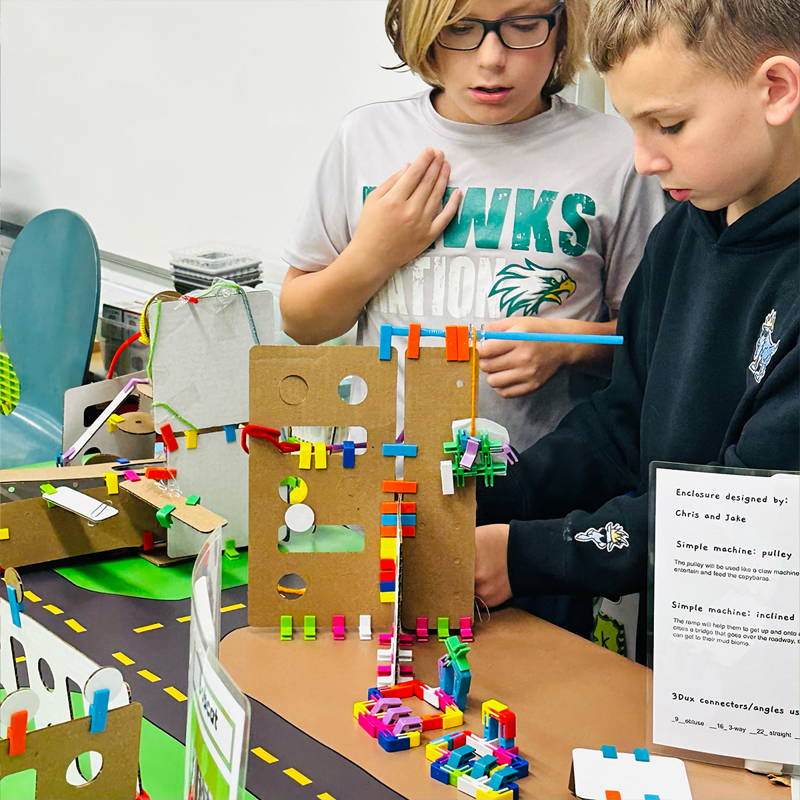
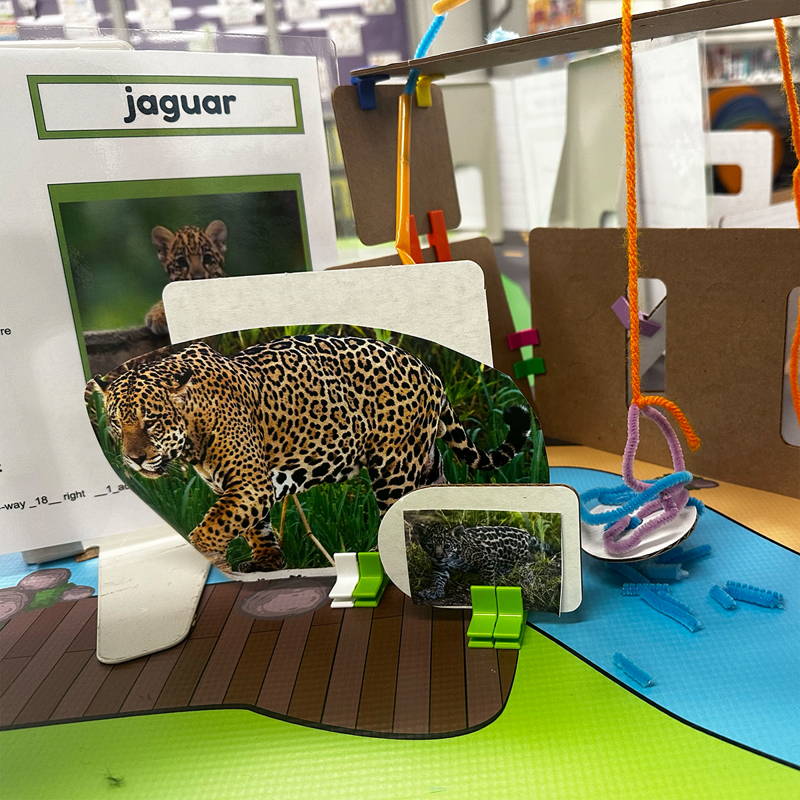
In Bridgeport, families filled the classroom for the final showcase. Students beamed as they explained their exhibits, pointing out the math, science, and design decisions that brought their zoos to life. Parents leaned in, asked questions, and celebrated their children’s creativity.
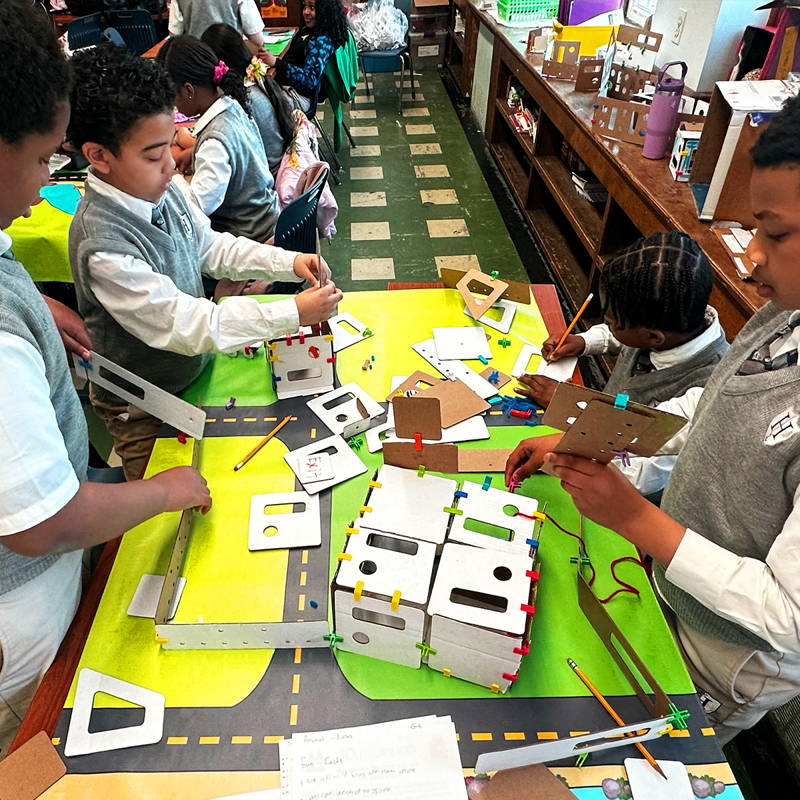
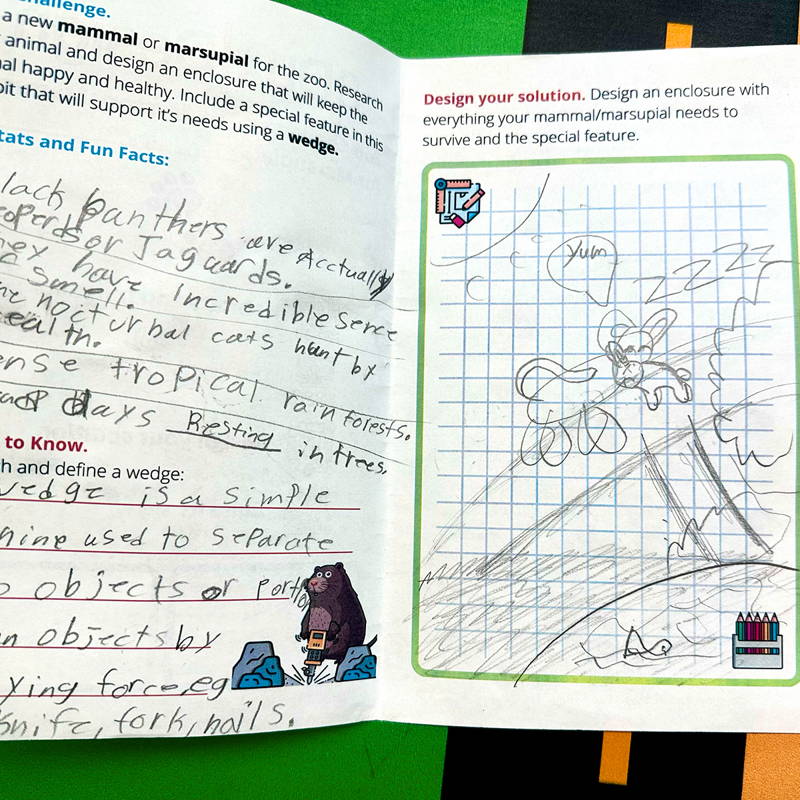
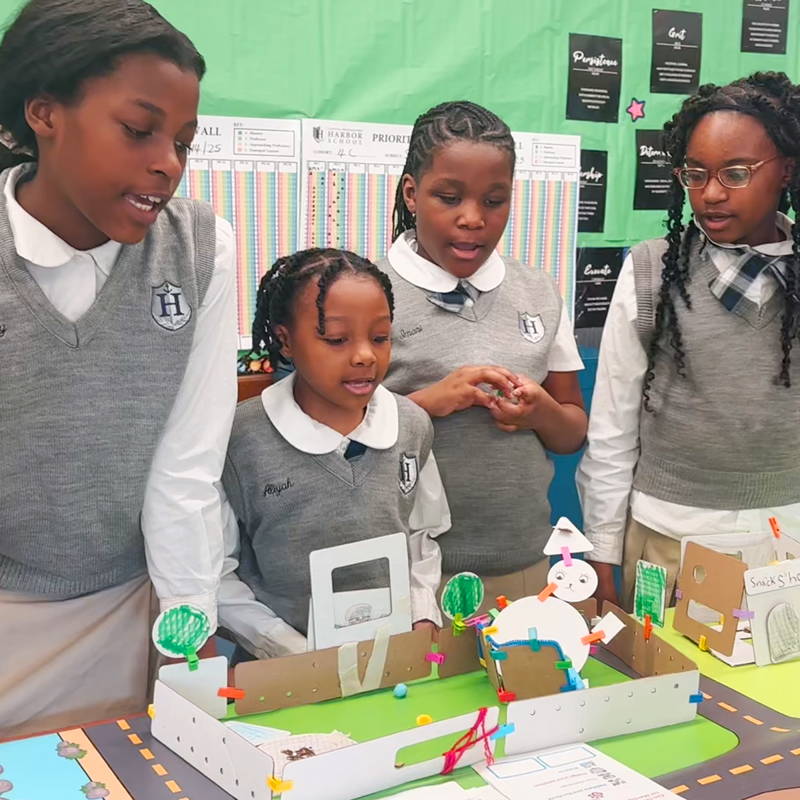
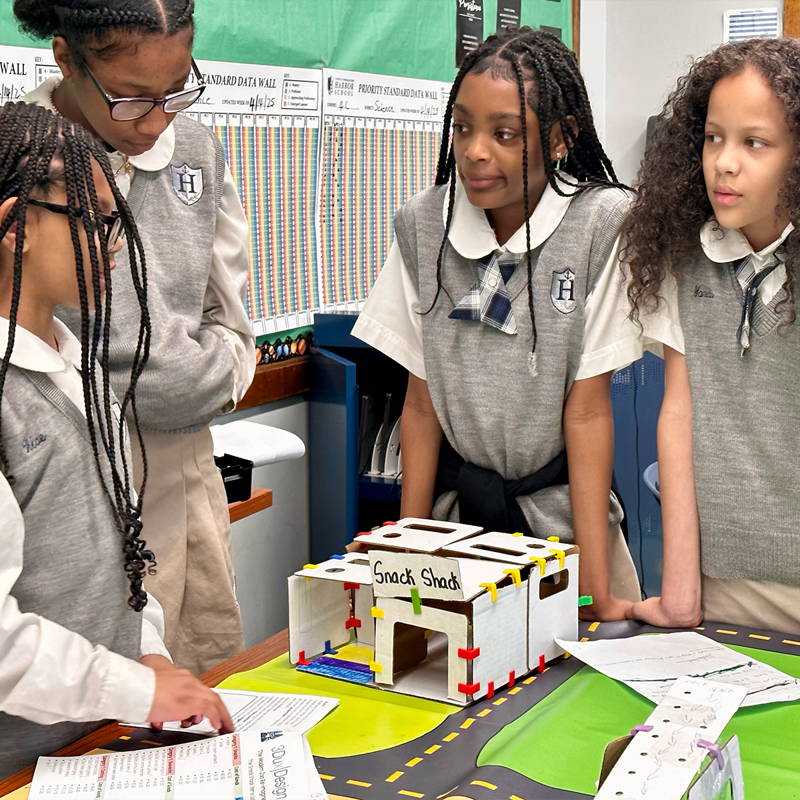
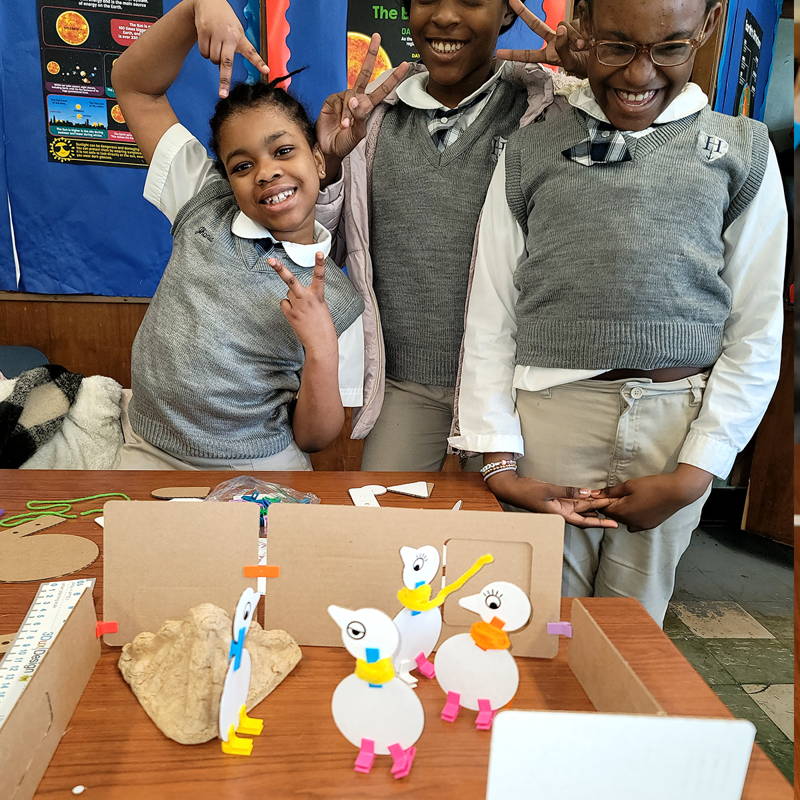
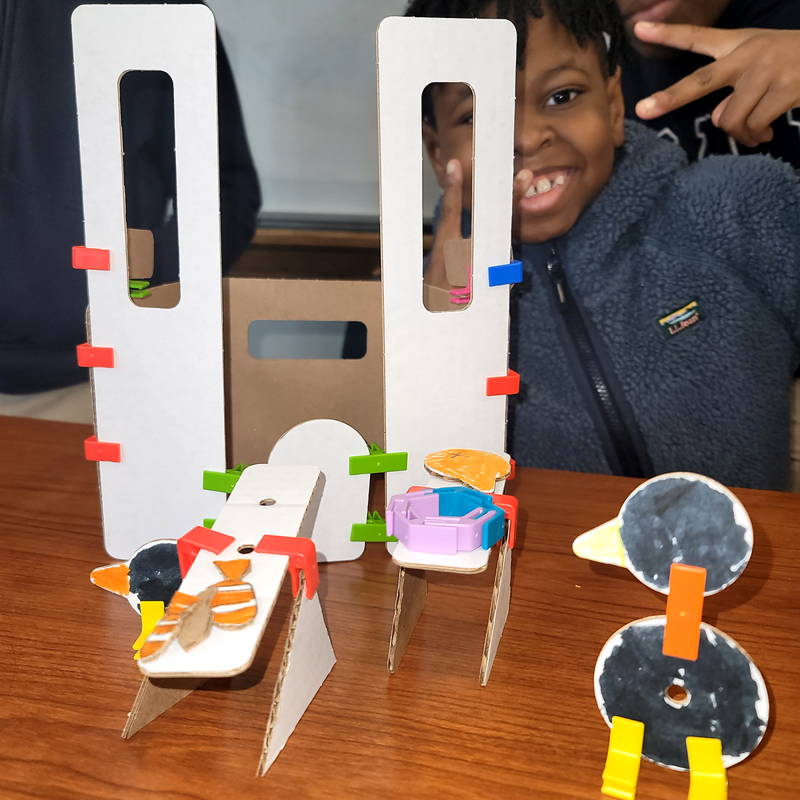
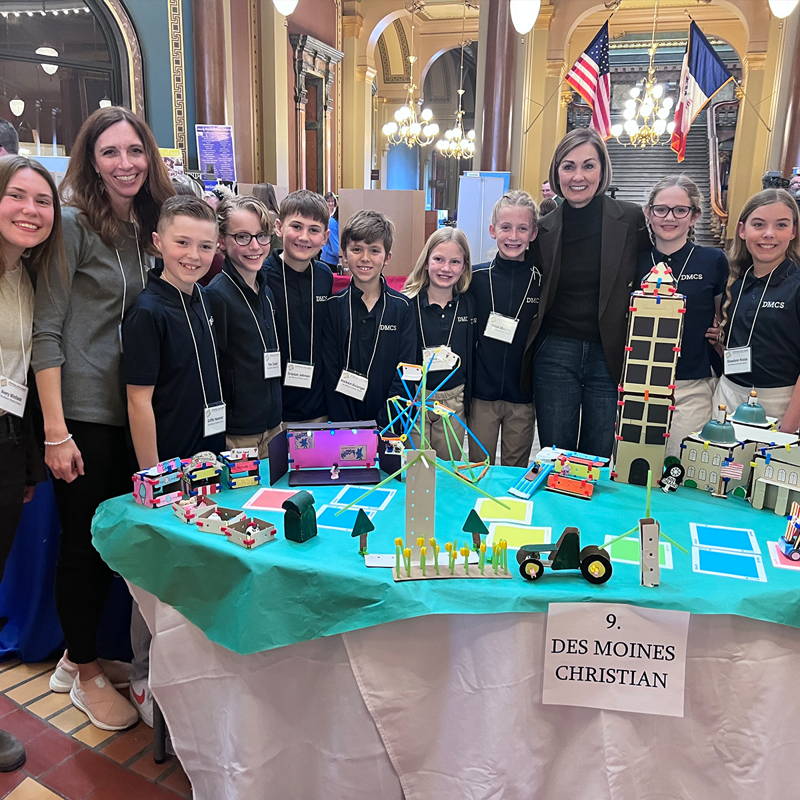
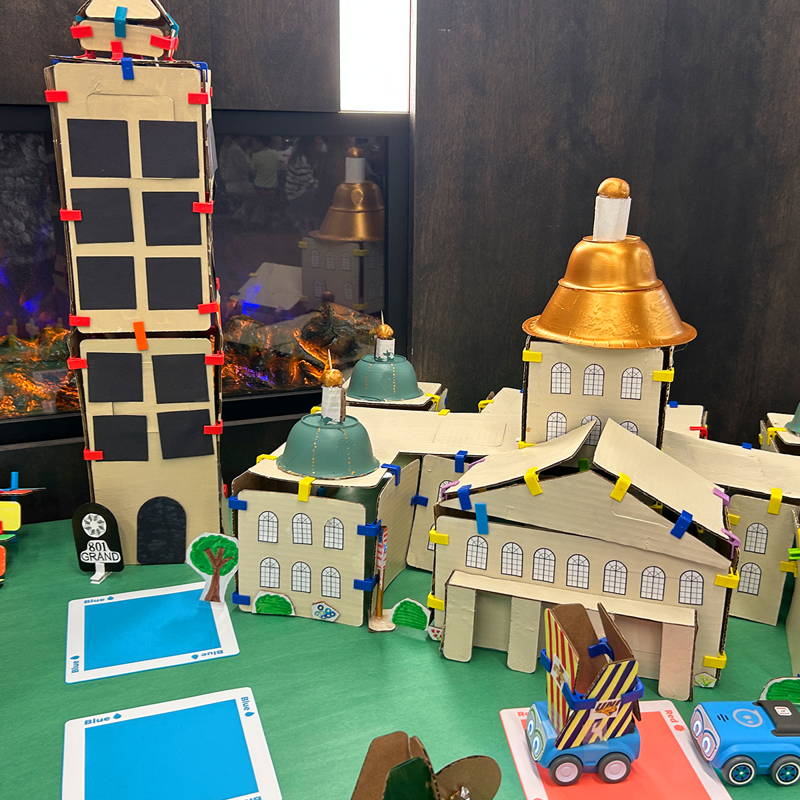
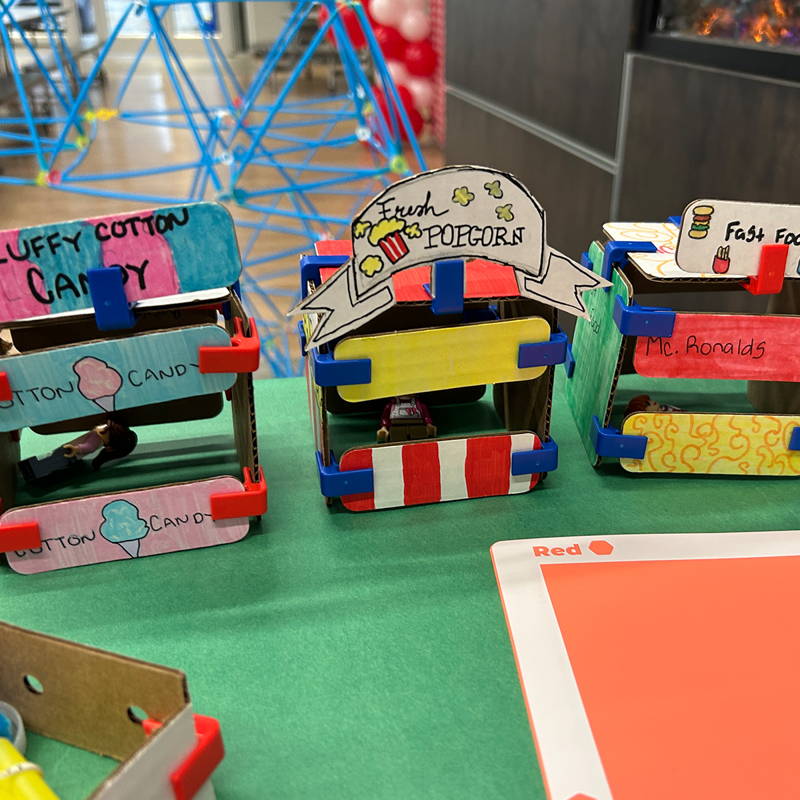
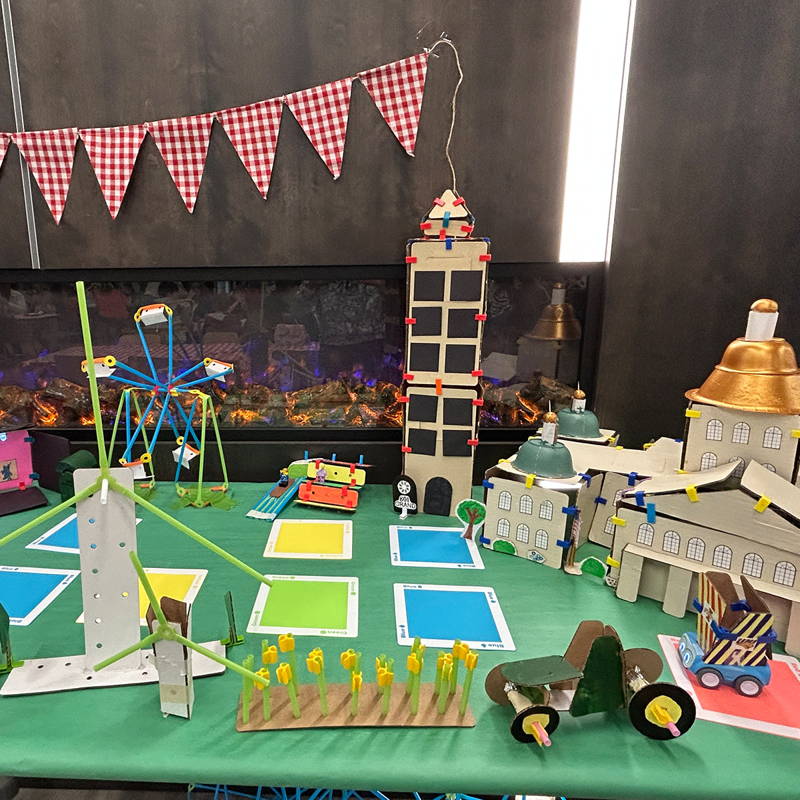
While this class from Des Moines, Iowa did not formally participate in the Zoo Pilot, their Zo-Building experience was a huge success as well!
Bring the Zoo Challenge to Your Learning Space!

